The referral may arrive as one more page in a folder that is already too full. “Genetic testing” sounds like it ought to answer a simple question: Why is my child autistic? Then you see words such as microarray, fragile X, and variant of uncertain significance. Suddenly you are being asked to consent to a test before you are quite sure what an answer would mean.
I can understand wanting a clear explanation. I would want to know what the test might change for my child, what it could tell us about other relatives, and what happens if it finds nothing. Those are reasonable questions to bring to the appointment. You do not have to pretend a DNA report is easy to read.
The first point I want to keep straight is that an autism diagnosis is made from a child’s development and behavior. A genetic test does not decide whether a child is autistic. It looks for a genetic finding that might explain part of the picture or signal another health issue worth watching. The American Academy of Pediatrics recommends offering a genetic evaluation to families of autistic children, while recognizing that the useful test depends on the child’s history and examination. You can ask why a particular test is being offered to your child.
What the first tests are looking for
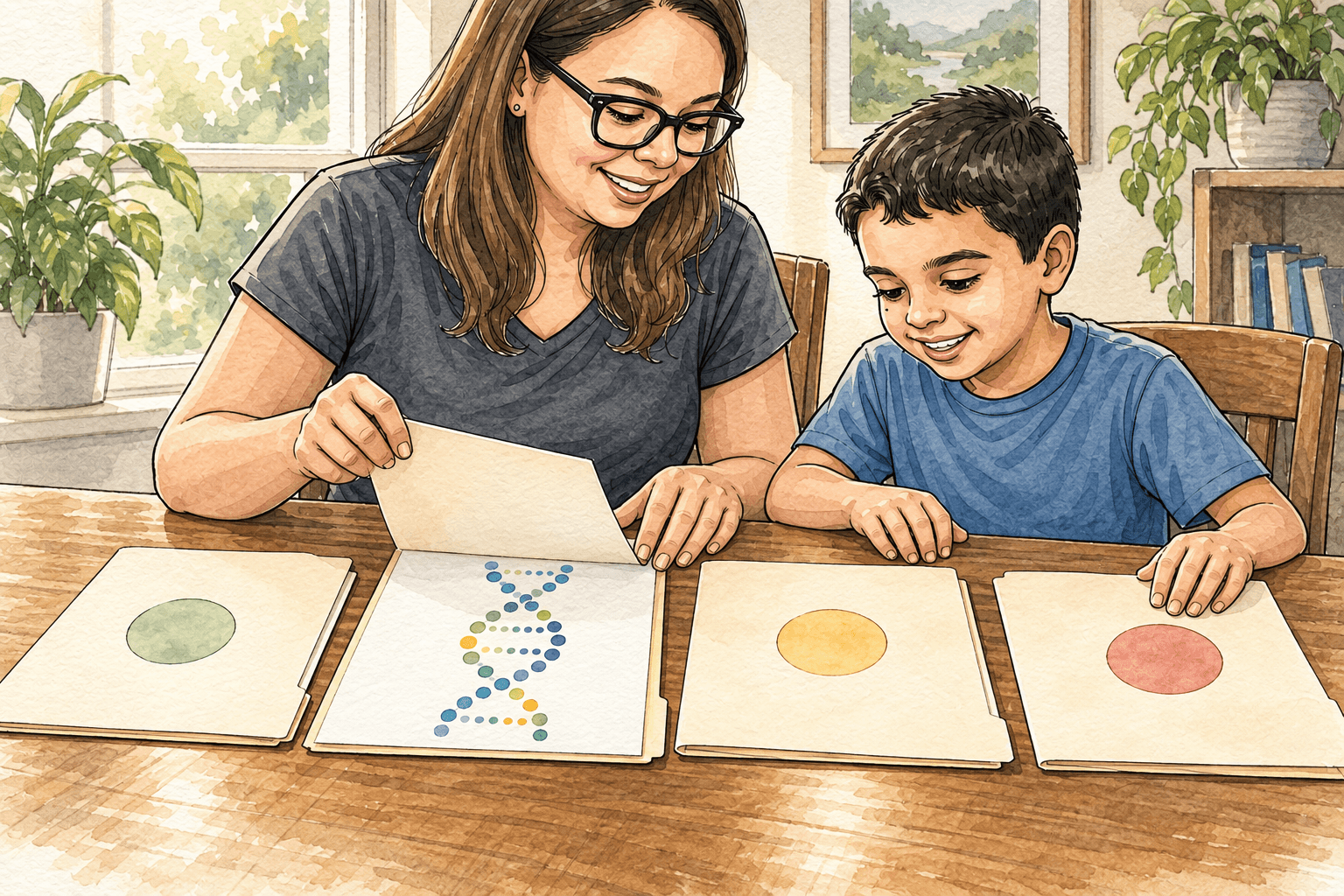
A chromosomal microarray, often shortened to CMA, looks for missing or extra stretches of DNA. Think of it as checking whether a section of the instruction book has been copied twice or is absent. It does not read every letter of every gene. A clinician may suggest it because some of those changes are associated with developmental differences and, in particular cases, other medical needs. The AAP describes microarray as part of the genetic evaluation when the cause of a child’s developmental differences is unknown.
Fragile X testing is a separate test for a particular change in the FMR1 gene. A microarray does not detect that repeat expansion, so a normal microarray does not answer the fragile X question. The AAP recommends considering fragile X testing for autistic children, with attention to the child’s history and family history. It may also matter to relatives, which is one reason a genetics professional can be helpful when results come back.
Some families are offered exome or genome sequencing. Exome sequencing reads the protein-coding parts of many genes; genome sequencing reaches more broadly. The order of testing can vary as guidance and technology change. A geneticist might recommend sequencing after earlier tests, or discuss it sooner when a child’s other features make it useful. Rather than trying to memorize an ideal sequence, I would ask: “What can this test find that the earlier one cannot, and how would the answer affect care?”
There is a difference between finding a genetic contribution and finding the cause of autism. Many genetic differences can contribute to development, and a finding may explain only one piece of a child’s health. A family might receive information about a condition that raises the chance of another medical issue, for example, and the medical team can then decide whether screening is appropriate. Another family might get no actionable finding. I would ask the clinician to separate what the laboratory found from what has actually been shown to matter for this child. That distinction protects families from both false certainty and needless alarm.
Blood is often used for these tests, but the sample and process depend on the lab. If a blood draw will be hard for your child, say so before the appointment. Ask whether another sample is accepted for the specific test and what supports the lab can provide. The sample itself is one part of the decision. The consent form and the interpretation deserve just as much attention.
A result can be helpful without explaining everything
A report may identify a pathogenic or likely pathogenic finding. Those terms mean the lab has evidence that the change is associated with a condition. It does not mean the finding predicts every detail of your child’s future. Two children with the same named condition can have different strengths, challenges, and medical histories. The clinician should explain whether the result suggests a screening test, a specialist visit, a change in care, or a question for relatives. If none of those follow, it is okay to ask what practical value the result has.
Another possible result is a variant of uncertain significance, or VUS. This is a real DNA difference, but there is not enough evidence to say whether it causes a health problem. The NIH’s MedlinePlus Genetics guide is plain about this: an uncertain result cannot confirm or rule out a diagnosis. It should not be treated as a proven explanation because a report contains a long gene name. Sometimes testing a parent or another relative helps the team interpret the finding; sometimes the answer remains uncertain.
And then there is the word negative. It can feel reassuring or frustrating, depending on what you hoped to learn. It means the test did not identify a relevant change within what that test could detect and what is currently understood. It does not mean your child’s autism is less real. It does not mean the family did something to cause it. It does not erase a need for support, either. MedlinePlus notes that a test may miss a change it was not designed to find and that later knowledge may change interpretation.
I would ask for the actual report, not only a phone message that says “everything was normal.” Keep the test name, lab, date, and written interpretation together. If a new medical concern arises, those details help the next clinician see what was and was not examined. They also make it possible to ask, later, whether a reanalysis is worthwhile. That is a conversation with a genetics team, not a promise that a negative result will eventually turn positive.
If several relatives have developmental or medical concerns, tell the genetics team what you know, including which relative and what diagnosis was made. You do not need a perfect family tree. The history can help interpret a result and decide whether testing a parent would answer a useful question. At the same time, a child should not have to wait for every relative’s paperwork before receiving services. Genetic evaluation and day-to-day support can happen alongside each other.
Questions to ask before saying yes
The consent conversation should fit your family. I would take these questions on paper because it is easy to lose one when an appointment moves quickly:
- What is the reason for testing now? Is there a specific medical clue, a family-history question, or a general evaluation recommendation?
- Which test is being ordered? What does it detect, and what does it miss? Is fragile X included or separate?
- What could change for my child? Would a finding lead to screening, specialist care, or a different treatment decision?
- What kinds of unexpected findings might be reported? Who decides which secondary findings to receive, if that choice applies?
- Who will explain the result? Can we meet with a genetic counselor or clinical geneticist, including if the answer is uncertain?
- What will it cost us? Ask the office and insurer about authorization, network status, and any lab estimate before the sample is sent.
- Where will the sample and data go? Will the lab store the sample, share deidentified data, or permit future use? What choices are on the consent form?
That last question is not an accusation. A child’s DNA is deeply personal information. A clinical test ordered by a health professional is different from uploading raw DNA data to a consumer website. If a company offers to “decode” a report for you, pause before sending the file. MedlinePlus Genetics warns that once raw data is downloaded and shared with a third party, the original company’s privacy safeguards no longer protect that copy. Ask the clinical team what service, if any, they recommend.
For sequencing, ask whether the laboratory may report a secondary finding unrelated to the reason for testing. MedlinePlus Genetics explains that sequencing can uncover a medically relevant finding outside the original question. The consent choices and reporting practices differ by test and lab. I would want the clinician to explain those choices before the sample is collected, in terms a parent can use, rather than after an unexpected result arrives.
When the appointment ends with more questions
If the result names a condition, ask what part of the report is certain and what care recommendations actually follow from it. If the result is uncertain, ask what evidence would change its classification and who is responsible for contacting the family if that happens. If the result is negative, ask whether the team recommends follow-up now, later, or only if new symptoms appear. Write down who will receive the report besides you, including your child’s pediatrician.
There is also an emotional piece that a lab report cannot settle. Some families feel relief at having a name. Some feel grief, or worry about relatives, or anger that the answer took so long. Some feel nothing in particular. No response is the correct one. I would resist anyone who turns a finding into a promise about who a child will become. The child in front of you still needs the ordinary work of being listened to, supported, and cared for.
A genetics visit should leave you with a clearer understanding of the limits of the test as well as its possible benefits. If the explanation does not make sense, ask the clinician to try again in everyday words. You are allowed to ask what a term means, why a test was chosen, and what you should do with the answer. That is what informed consent is for.
Caren
A Few of Our Go-To Favorites
Shop the Full StorefrontThese storefront picks cover other parts of family life; none is a treatment for the topic in this article. Check Amazon for current prices and availability.

Trekassy 40 inch Saucer Tree Swing (Sensory Toys)
From Caren’s storefront collection.
See current price

Skoolzy Peg Board Set (Sensory Learning Toys)
From Caren’s storefront collection.
See current price
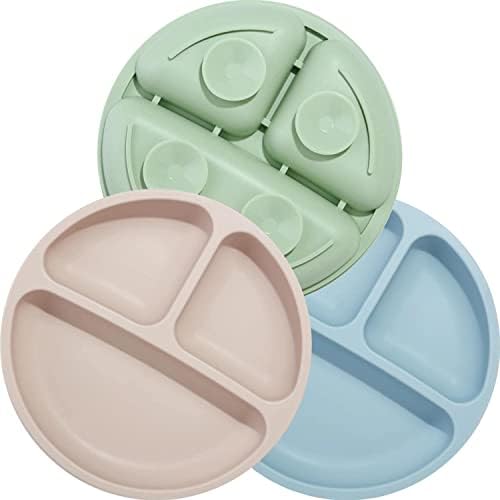
PandaEar Divided Suction Plates (Feeding Tools)
From Caren’s storefront collection.
See current price

MaryRuth's Kids Ionic Zinc Drops (Suppliments)
From Caren’s storefront collection.
See current price

Boon Travel Drying Rack (Travel Essential)
From Caren’s storefront collection.
See current price

SwimWays Dive and Catch Game (ASD Swimming Gear)
From Caren’s storefront collection.
See current price
Sources
- American Academy of Pediatrics, Identification, Evaluation, and Management of Children With Autism Spectrum Disorder
- MedlinePlus Genetics, What do the results of genetic tests mean?
- MedlinePlus Genetics, What do direct-to-consumer genetic testing results mean?
- MedlinePlus Genetics, What are secondary findings from genetic testing?