A child covers their ears when the room gets loud. An adult nearby says, “They need to learn to deal with it.” The parent now has two jobs at once: help the child feel safe and decide whether this person is ready to listen.
That is the hard part of explaining autism. You may have only a few seconds, while the person asking expects a complete lesson. You may also be tired, protective, or angry. You do not owe everyone a lecture, and your child does not owe anyone a performance that proves their diagnosis.
I wanted to look closely at what a useful explanation can sound like because “raising awareness” is too vague. Parents need words for the relative who thinks autism has one look, the teacher who sees regulation as defiance, and the stranger who decides a difficult moment is bad parenting. The words should protect the autistic person in front of us, not turn them into an example for other people.
Start with the person, not a definition
The CDC describes autism as a developmental disability related to differences in the brain. It can affect communication, social interaction, routines, movement, attention, learning, and sensory experiences. That definition is accurate, but it is still only a doorway.
The person listening usually needs to understand what autism means for this child in this moment. Try something concrete: “He hears the hand dryer much more intensely than we do, so he may cover his ears or leave the bathroom.” Or, “She understands what you said, but she may need extra time before answering.” One real example will often teach more than a list of diagnostic terms.
Avoid trying to describe every autistic person through your child. Autism varies widely. One person may speak a lot and still struggle to communicate under stress. Another may use an AAC device, gestures, signs, pictures, or body movements. A child may seek spinning and jumping but avoid fluorescent lights and crowded rooms. Support needs can also change with the setting, pain, sleep, or stress.
A short starting script can be enough: “Autism means his brain processes communication, sensory information, and change differently. He is not giving us a hard time. Right now, the noise is hard for him.” Then help the child. Education can continue later.
Correct the assumption underneath the comment
People sometimes use a polite question to carry an unkind assumption. “Does he understand you?” may mean they have confused spoken language with intelligence. “Why does she get special treatment?” may mean they see an accommodation as an unfair advantage. Answering only the surface question can leave the real problem untouched.
If someone talks about the child as though they are not present, bring the child back into the conversation: “Please ask her directly. She can answer with her device.” If speech is limited, you can say, “Not speaking does not mean not understanding. Give him time and watch how he communicates.” The Autistic Self Advocacy Network recommends presuming competence, which means starting from the belief that a person can think, learn, and communicate even when their response looks different from what others expect.
If the comment is about discipline, name the need that the adult is missing. “He is overwhelmed and cannot process more instructions right now. We are reducing the noise and giving him space.” This does not mean unsafe behavior is ignored. It means support comes before a lesson. A nervous system in overload is not ready for a debate about manners.
Simple answers to comments parents hear
You do not need a perfect speech. A calm sentence that protects the child is enough.
- “He does not look autistic.” Try: “There is no single autistic look. You are seeing one person during one part of his day.”
- “Everyone is a little autistic.” Try: “People can share individual traits, but autism is a lifelong developmental disability. That phrase makes the support needs sound smaller than they are.”
- “She just needs more discipline.” Try: “Consequences will not make the lights quieter or help her process language faster. We are changing what is overwhelming her.”
- “He will talk when he is ready.” Try: “We hope his communication keeps growing, and we are supporting every reliable way he can communicate now.”
- “Why can she do it sometimes but not today?” Try: “Ability can change with stress, sleep, pain, sensory load, and how much language she has to process.”
- “You let him get away with too much.” Try: “An accommodation is not the absence of expectations. It gives him a fair way to participate.”
You can change those words to fit your child and the relationship. A grandparent may deserve a longer conversation because they will be part of the child’s life. A cashier who makes a comment during a hard moment may get one sentence or no answer at all.
Explain what support looks like
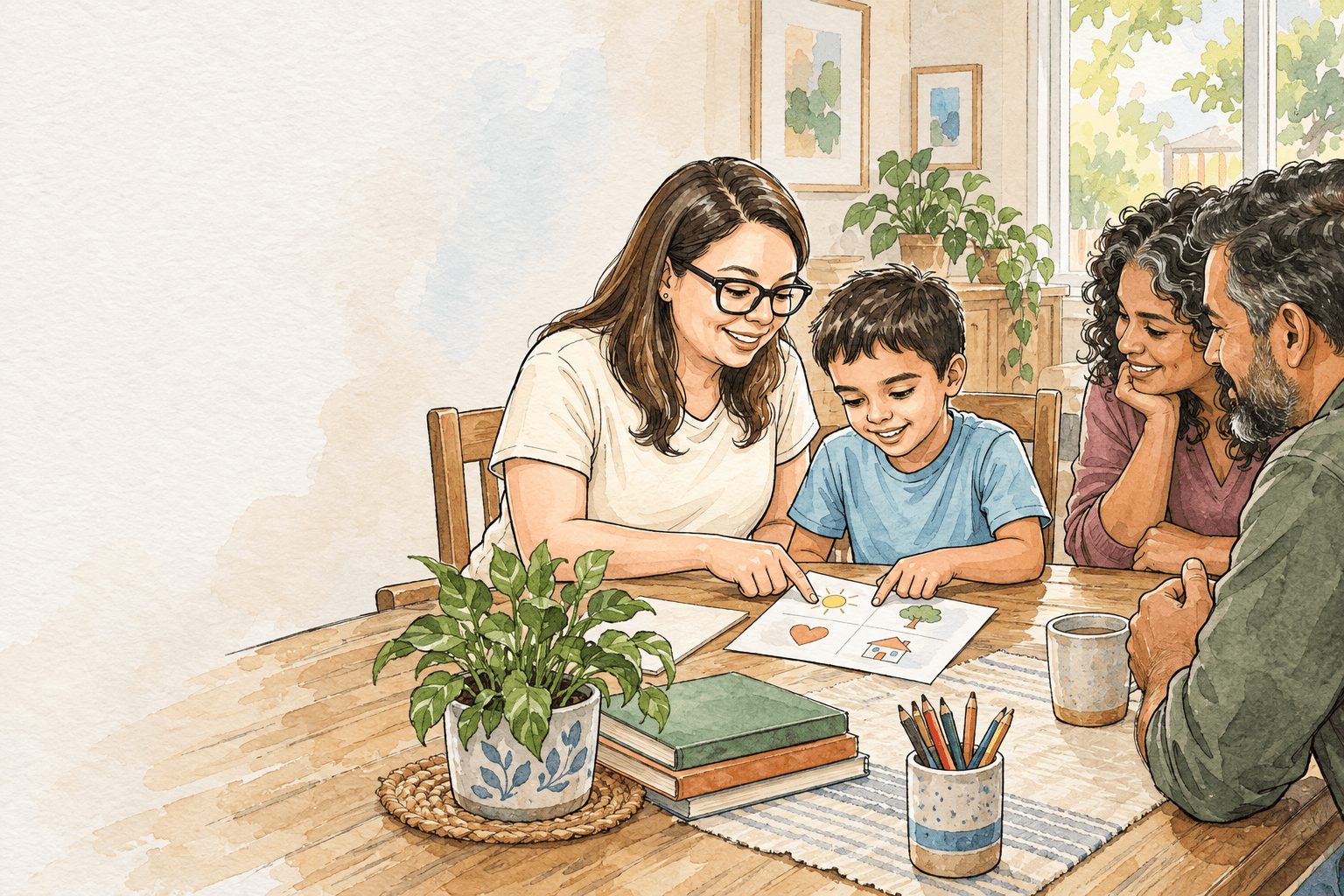
Some people hear “accommodation” and imagine that the child is being excused from everything. Show them the actual support. A visual schedule tells the child what will happen. Headphones reduce painful noise. A movement break makes it possible to return to the table. An AAC device gives the person a voice. A quiet room prevents overload from becoming a crisis.
Then give the listener one useful job. “Please tell him before you touch him.” “Ask one question and wait.” “Keep the bathroom fan off.” “If she walks away, let her take the break.” Specific directions are easier to follow than “be more understanding.”
Explain strengths with the same specificity. Do not balance every need with a forced superpower. Say what is true: the child remembers every train route, notices a change in a familiar song, draws for an hour, tells wonderfully direct jokes, or cares deeply about animals. A person does not have to be gifted in a dramatic way to deserve respect.
Protect your child’s privacy
Parents often share a diagnosis because it helps relatives, teachers, coaches, or caregivers respond safely. That does not give every adult access to the child’s medical history, hardest day, toileting details, therapy records, or private fears. Share what the person needs to know for the situation.
The National Autistic Society notes that disclosure is personal. As children get older, they should have more say in who is told and how autism is explained. A child may want a teacher to know but may not want classmates told. They may prefer “autistic” or “person with autism.” Ask, listen, and update the script as their understanding grows.
Talk about autism with the child, not only around them. Use language they can understand. Name strengths, needs, communication, and sensory differences without shame. When adults whisper the word but openly discuss every difficult behavior, a child can learn that autism is something embarrassing. They deserve a better message about their own mind.
Know when to stop explaining
Understanding can grow when someone is uninformed and willing to learn. You may see it when they ask what helps, change their behavior, apologize, or read the resource you send. Give that person a clear next step and a chance to do better.
Other people keep arguing after you have answered. They demand proof, blame parenting, send cure videos, or make the child responsible for their comfort. More information may not fix a refusal to respect a boundary.
You can say, “I have explained what he needs. This is not open for debate.” You can end a visit, change a caregiver, ask for a school meeting, or leave the store. Safety and dignity matter more than convincing someone who has decided not to listen.
This boundary can feel especially painful with family. You may want their approval, help, or closeness. You may also hope that one more article will change everything. Give people room to learn, but watch what they do with the information. Respect should show up in quieter voices, fewer demands, protected routines, and the way they speak to the child when you are not standing beside them.
Let the autistic person be more than the lesson
An autistic child should not have to educate every room they enter. They should get to play, rest, learn, refuse, laugh, and have a bad day without becoming a public example of autism. Adults can do the background work.
Send one reliable resource before the gathering. Tell the host what needs to change. Explain the communication system to the babysitter. Speak privately with the teacher instead of correcting them across the classroom. Preparation can reduce the number of explanations made while the child is already overwhelmed.
I cannot control what every person believes about autism. I can choose words that are truthful, protect a child’s dignity, and make the next action clear. Sometimes that opens a real conversation. Sometimes the right answer is a boundary and the door.
If someone wants to understand, help them see the person in front of them. If they only want an argument, you are allowed to be done.
Keep going, you’ve got this!
A Few of Our Go-To Favorites
Shop the Full StorefrontNothing in our storefront is specific to this guide, so here’s one real favorite from each of our categories instead.

Trekassy 40" Saucer Tree Swing (Sensory Toys)
Our most-used backyard sensory swing, hands down.
$39.99

Skoolzy Peg Board Set (Sensory Learning Toys)
Great for fine motor practice, no screen required.
$16.99


MaryRuth’s Kids Ionic Zinc Drops (Suppliments)
Part of our everyday immune-support routine.
$18.95

Boon Travel Drying Rack (Travel Essential)
Small enough to actually pack, useful every trip.
$12.70

SwimWays Dive and Catch Game (ASD Swimming Gear)
Builds pool confidence without feeling like a lesson.
$19.43
If you’ve already been down this road and found something I didn’t mention here, I’d genuinely like to hear it. You can always reach me through the contact page.
Caren