The invitation says dinner at four. What it does not say is that twelve people will arrive talking at once, music will be playing, the lights will blink, the familiar food will be moved to make room for serving dishes, and everyone will expect a hug.
A holiday can collect an entire week of sensory and social changes into one room. The answer is not to demand that an autistic child push through every tradition. We can keep the parts that bring joy and loosen the parts that make the day impossible.
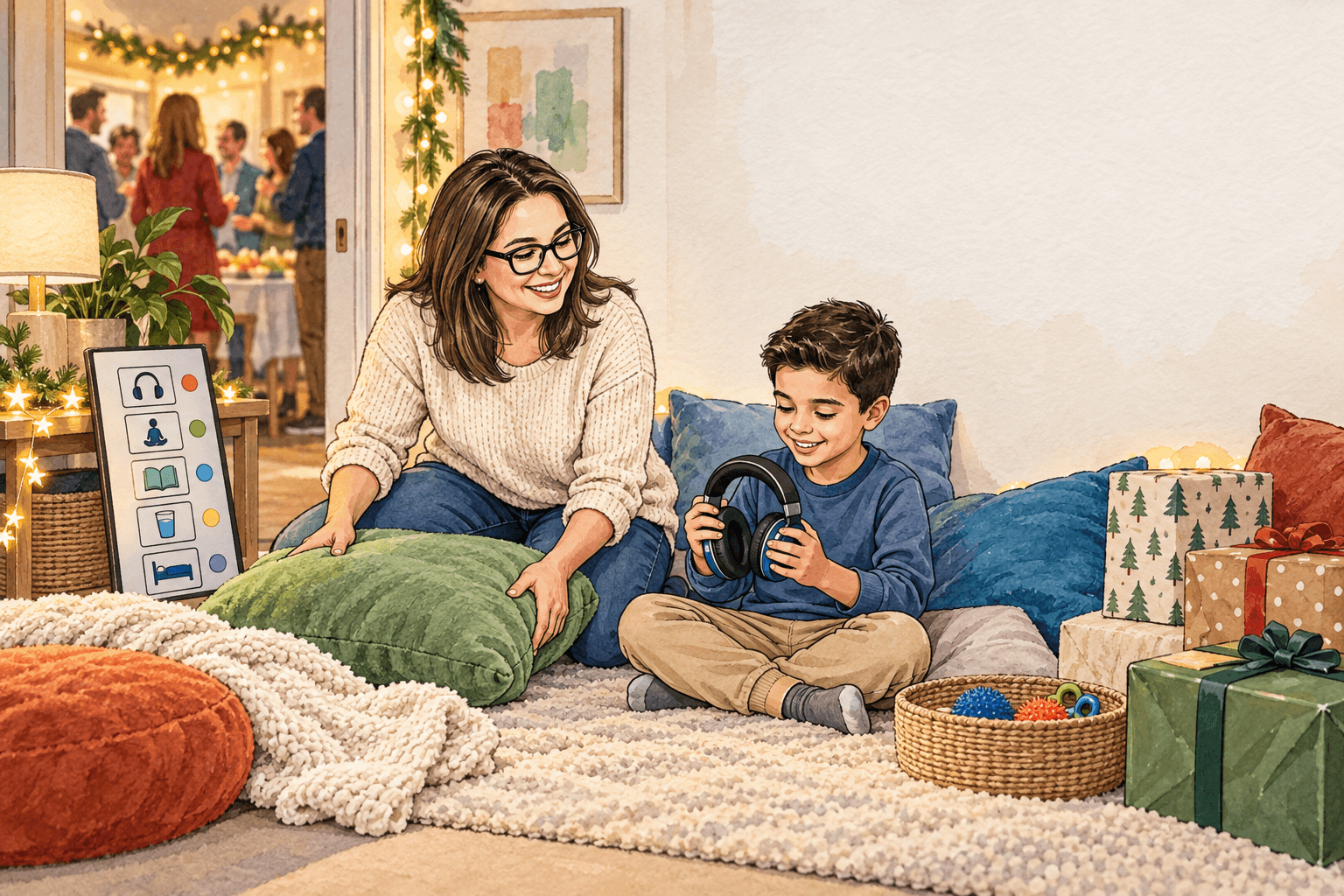
Make the invisible schedule visible
Tell the child where you are going, who will be there, what food is likely, which activities are optional, and when you expect to leave. Use photos, a short written list, or picture symbols that match how the child understands information. Mark uncertainty honestly: “Cousins may arrive after dinner” is better than promising an exact sequence nobody controls.
The National Autistic Society’s holiday guidance recommends planning around routine and sensory differences, using visual schedules when helpful, and creating access to a quiet space. Previewing does not guarantee a smooth day. It reduces surprises and gives the child language or pictures for what comes next.
Protect familiar anchors
Offer choices that are real and limited. The child might choose the blue sweater or the soft shirt, sit at the table or nearby, greet with a wave or words, and open one gift or wait. Too many open questions can become another demand, while no choice at all removes control from a day already full of surprises.
Food deserves special care. A familiar plate at a holiday table is not rude. Avoid bargaining for one bite in front of relatives or using dessert as pressure. If food allergies are involved, label dishes, prevent cross-contact, and make sure the person supervising the child knows the plan.
Keep sleep, medication, meals, and favorite routines as steady as the day allows. Bring a familiar meal or snack without making it a debate about gratitude. Comfortable clothes are more useful than an outfit that becomes painful after ten minutes. Let a child open gifts slowly, later, or not in front of an audience.
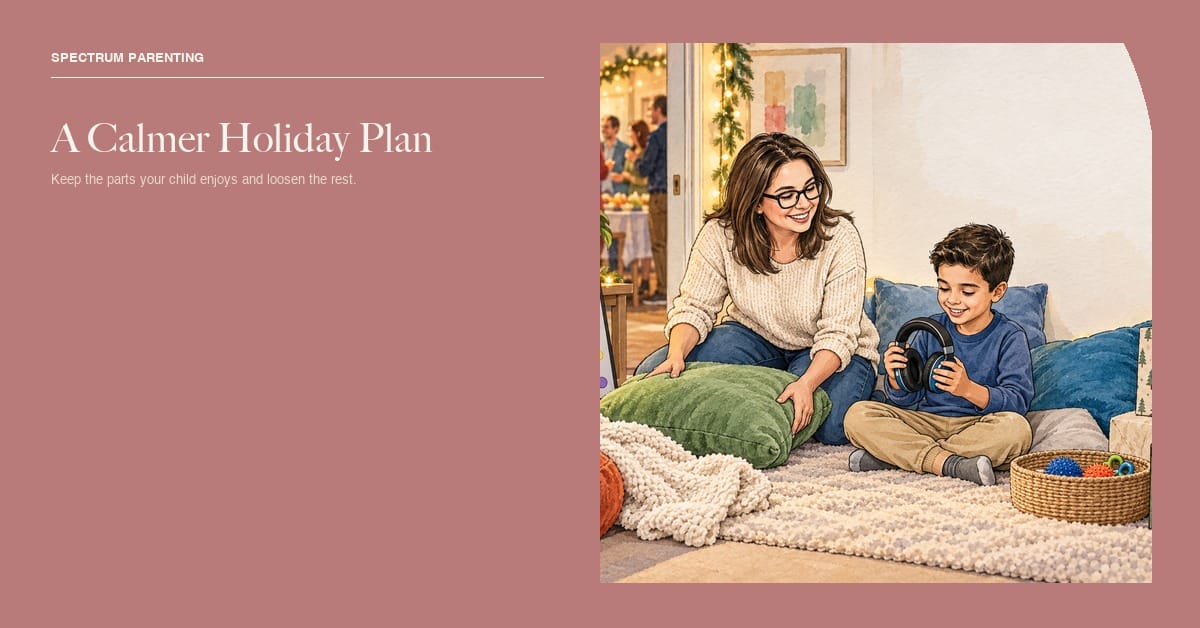
Pack the regulation tools the child already uses: headphones, sunglasses, a hat, a communication board, a charged AAC device and backup, a favorite object, gum or crunchy food when safe, and a small movement activity. A holiday is not the day to test six new sensory products at once.
Choose the quiet space before it is needed
Ask the host for a bedroom, porch, office, or calm corner away from traffic. Check whether the room has a lock, breakable objects, pets, bright lights, or people who will wander in. Explain that the space is available before the child becomes overwhelmed. It is a support, not a punishment.
A break signal should work even when speech is hard. It might be a card, a hand sign, a text, or handing an adult the headphones. Every adult who is responsible for the child should know the signal and the response.
Give relatives a short script
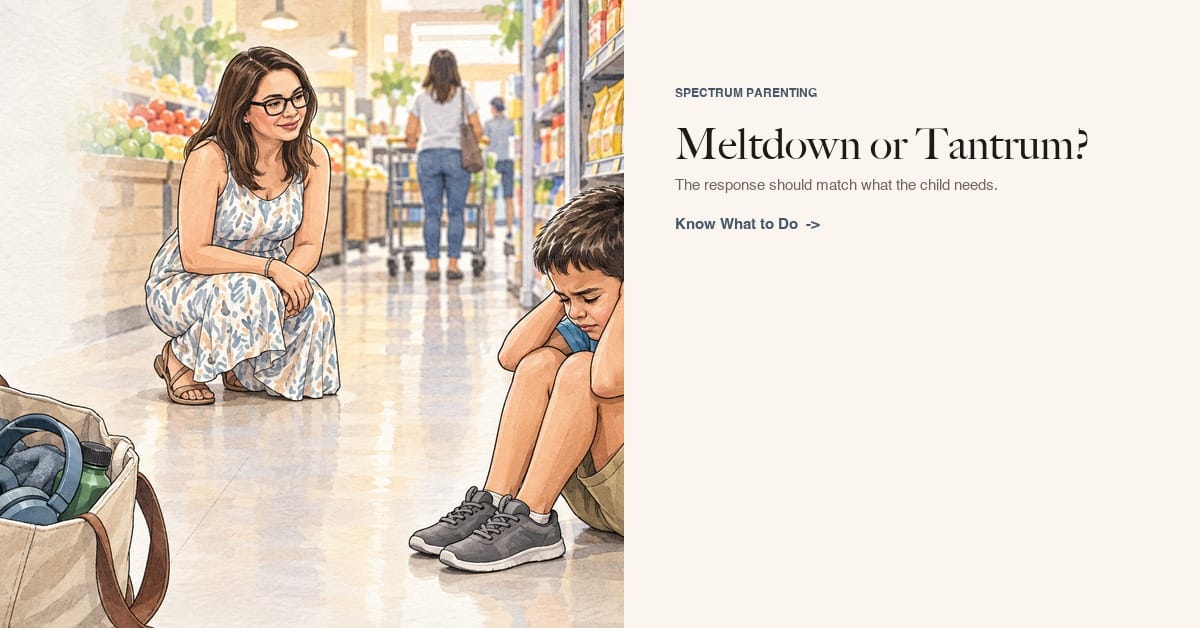
Tell adults not to block stimming, remove a communication device, tease about food, or announce the child’s private information. A child who rocks, paces, hums, or repeats a phrase may be regulating. Intervene when there is a safety issue, not because the movement looks unfamiliar.
Gift givers can help by asking first, avoiding loud surprise toys, leaving items in packaging until the child is ready, and accepting a nontraditional response. Excitement may look like walking away, repeating the same words, or focusing on one part of the gift.
Family members may mean well and still add pressure. Send the boundary before the gathering: “Please let him choose whether to hug. He may wear headphones or eat food we bring. If we step away, we are helping him regulate. We will come back if he is ready.”
You do not owe a long explanation during a hard moment. “He needs space right now” is enough. Save education for later, when the child is not the demonstration.
Plan the exit while everyone is calm
Large public events need the same planning. Check parking, entrances, bathroom locations, bag rules, lighting, sound, seating, and re-entry rules before buying tickets. Ask the venue whether it offers a quiet room, sensory bags, early entry, or disability accommodations. Bring identification and an elopement plan when wandering is a risk.
If travel is involved, preview the airport, hotel, or route with pictures and maps. Put essentials in the carry-on, including medication, food, communication tools, and a change of comfortable clothing. Leave more transition time than the fastest itinerary requires.
Drive separately when possible. Keep coats, shoes, medication, and the comfort bag where they can be reached. Decide which adult leaves with the child and what happens if siblings or a partner want to stay. A clear exit plan keeps one overwhelmed child from becoming the center of a family argument.
Leaving after forty good minutes is not failure. Skipping one event is not failure. Celebrating at home with the same breakfast, movie, walk, or small ritual every year can be a real tradition.
Schedule recovery too
Adults need a plan for their own expectations. We may picture the photo, meal, matching clothes, or long visit before asking what the child can comfortably enjoy. Letting go can feel disappointing. That feeling belongs to the adult and should not become the child’s job to fix.
Take photos without forcing poses. Ask before posting a vulnerable moment online. A meltdown, shutdown, toileting accident, or food struggle should never become holiday content for other people’s amusement or education.
A simple planning page
Practice parts of the plan on ordinary days. Wear the headphones for a short errand. Visit the host’s house when it is quiet. Show where the bathroom and calm room are. Rehearse the break signal, then honor it immediately so the child learns that communication works.
Build a backup for communication technology. Charge the AAC device, pack its charger, and bring a low-tech board or printed key phrases in case a battery dies or a device is misplaced. Make sure unfamiliar relatives know the device is the child’s voice and should stay within reach.
Think about safety during arrivals and departures. Doors may be left open, adults may assume someone else is watching, and crowded driveways can hide a child from view. Assign supervision clearly. If wandering is a known risk, use the family’s established identification and emergency plan rather than improvising after the child disappears.
Holiday mornings at home can be adjusted too. Turn on decorative lights gradually, reduce background music, leave batteries out of noisy toys until the child asks, and avoid piling every wrapped gift into one overwhelming moment. Let the child return to a familiar activity between surprises.
If plans change, show the new plan instead of repeating “it’s fine.” Name what is different and what remains the same. “The restaurant is closed. We are eating at Aunt Rosa’s. Your pasta and headphones are still in the bag, and we will leave after dessert.” Concrete information gives the child something to hold onto.
- Where are we going, and how long might we stay?
- Who will be there, and which greetings are optional?
- What familiar food and sensory tools are coming?
- Where is the quiet space?
- What signal means break or leave?
- Who handles the exit, medication, siblings, and transportation?
- What recovery time is protected afterward?
Share the page with caregivers and keep a copy on the phone. The point is not a perfect schedule. It is fewer decisions during overload.
Do not fill every day of a school break because the calendar looks open. Social effort and sensory input can show up later as exhaustion, irritability, shutdown, sleep disruption, or more frequent meltdowns. Put quiet days between large events. Reduce demands after travel or late nights.
After the holiday, note what the child sought out, avoided, and enjoyed. Maybe the lights were fine but the overlapping voices were not. Maybe gifts were exciting but opening them with everyone watching was too much. Use that information next year instead of repeating the whole plan unchanged.
The holiday belongs to the autistic child too. A successful celebration should not require them to hide pain, perform affection, eat unfamiliar food, or stay until the last adult is ready to leave.
Keep the connection. Change the plan.
A Few of Our Go-To Favorites
Shop the Full StorefrontNothing in our storefront is specific to this guide, so here’s one real favorite from each of our categories instead.

Trekassy 40" Saucer Tree Swing (Sensory Toys)
Our most-used backyard sensory swing, hands down.
$39.99

Skoolzy Peg Board Set (Sensory Learning Toys)
Great for fine motor practice, no screen required.
$16.99


MaryRuth’s Kids Ionic Zinc Drops (Suppliments)
Part of our everyday immune-support routine.
$18.95

Boon Travel Drying Rack (Travel Essential)
Small enough to actually pack, useful every trip.
$12.70
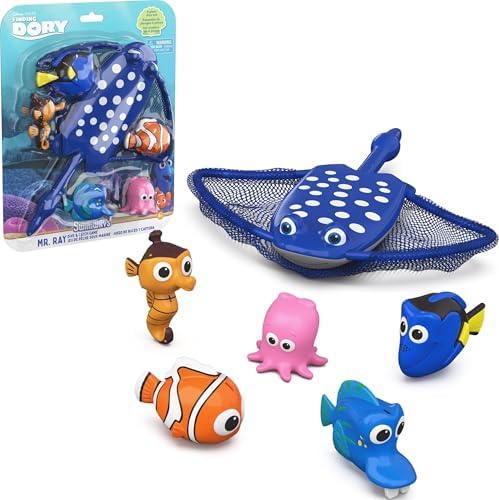
SwimWays Dive and Catch Game (ASD Swimming Gear)
Builds pool confidence without feeling like a lesson.
$19.43
If you’ve already been down this road and found something I didn’t mention here, I’d genuinely like to hear it. You can always reach me through the contact page.
Caren