A lunchbox comes home unopened three days in a row. A child who loved the bus begs to stay home. The answer to “Did someone hurt you?” is still no.
Bullying is not always reported in a clear sentence. An autistic child may not recognize that a classmate is pretending to be friendly, may take a threat literally, may fear losing access to a group, or may have trouble retelling events in order. Some children communicate distress through sleep, eating, behavior, or school refusal long before they can name what happened.
First, know what you are looking for
The Centers for Disease Control and Prevention describes bullying as unwanted aggressive behavior by another child or group that involves a real or perceived power imbalance and is repeated, or is likely to be repeated. A disagreement between equal friends is still worth helping with, but it is not handled in exactly the same way as bullying.
The power difference might be physical size, popularity, access to embarrassing information, communication ability, or a group acting against one child. The behavior can be physical, verbal, social, or online. It can also hide inside “jokes,” dares, exclusion, tricking a child into breaking rules, taking belongings, or recording a reaction for other people’s entertainment.
Signs that deserve a closer look
- Unexplained injuries, damaged belongings, or missing food or money
- New headaches, stomachaches, sleep problems, or appetite changes
- School refusal, repeated requests to be picked up, or fear of the bus
- A sharp increase in shutdowns, meltdowns, aggression, or exhaustion after school
- A sudden change in a route, lunch location, bathroom use, club, game, or online activity
- Deleting accounts, hiding a screen, or becoming distressed when notifications arrive
- Talking about being stupid, unwanted, trapped, or better off gone
None of these signs proves bullying. They are reasons to slow down, check for safety, and gather information. Medical pain, sensory overload, academic difficulty, anxiety, and other problems can cause some of the same changes, so keep an open mind while taking the concern seriously.
Ask questions a child can answer
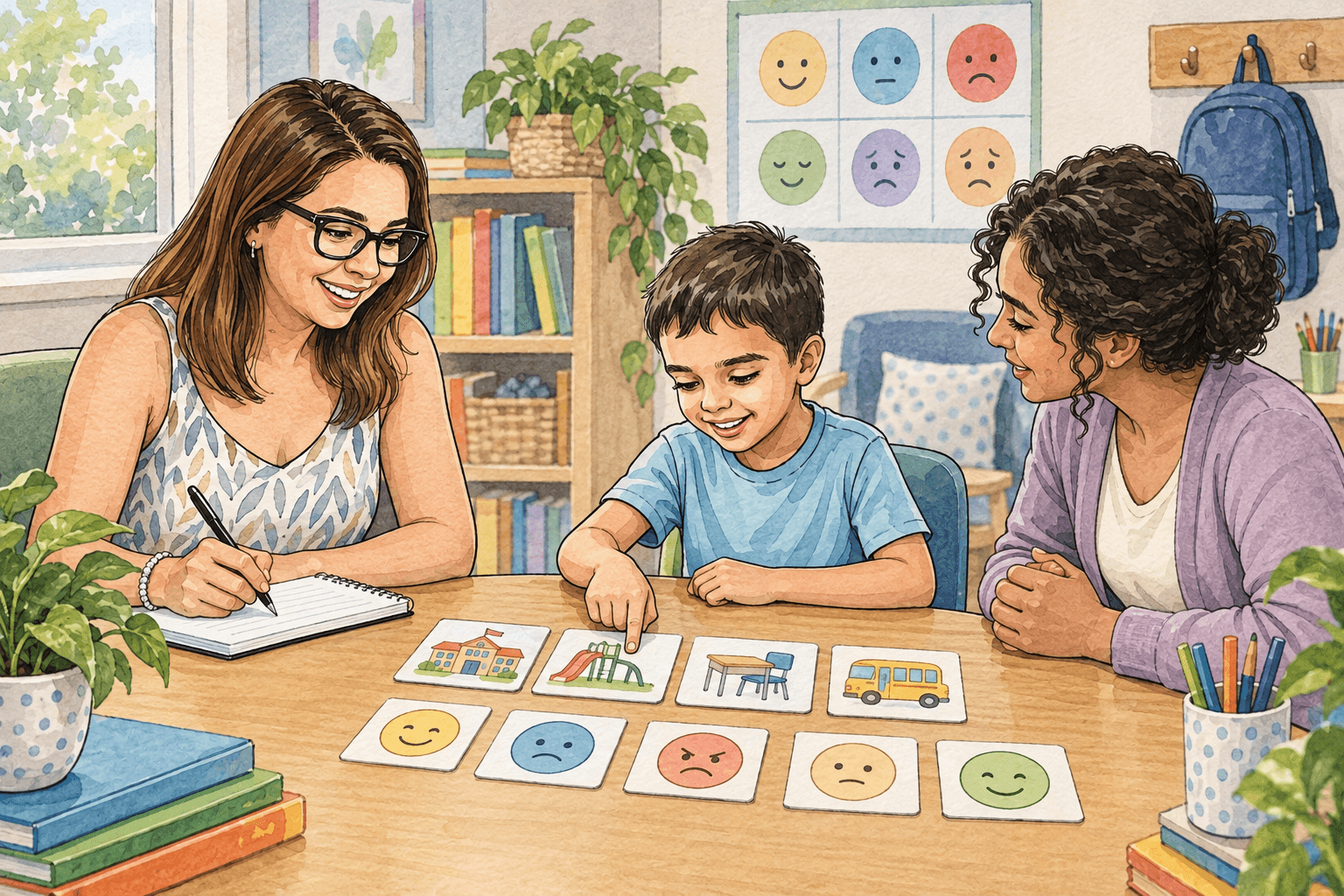
“How was school?” asks a child to search an entire day, decide what matters, organize it, and explain it. Try smaller questions tied to a place, time, or person:
- Who sat near you at lunch?
- Did anyone touch your backpack or food?
- Was recess safe, not safe, or somewhere in the middle?
- Did anyone tell you to keep a secret from adults?
- Did someone laugh with you, or were they laughing at you?
- Show me where you were when you wanted to leave.
Offer choices without forcing the child into your theory. A school map, photos of locations, a feelings scale, drawing, text messages, or AAC may work better than rapid questions. Allow processing time and return to the conversation later. Avoid asking the same leading question until you get a yes. We want the child’s account, including “I do not know” and “I do not want to talk yet.”
If your child tells you something happened, begin with: “I believe you. You did the right thing by telling me. This is not your fault. I am going to help.” Then write down the child’s words as closely as you can. Save screenshots, messages, photos of damaged items, dates, locations, witness names, and the names of staff you contact.
Look beyond the school building
A conflict that begins in class can continue through group chats, games, shared documents, photos, or social media after dismissal. Preserve the evidence before blocking or reporting an account when it is safe to do so. Record the username, date, time, platform, and the full exchange, not only one cropped message. Do not ask a child to keep reading harmful messages so adults can gather more proof.
Tell the school when online behavior involves classmates or affects the child’s ability to attend and learn. School rules and state laws differ, but the practical question remains the same: what must change so this child can participate safely tomorrow?
Contact the school in writing
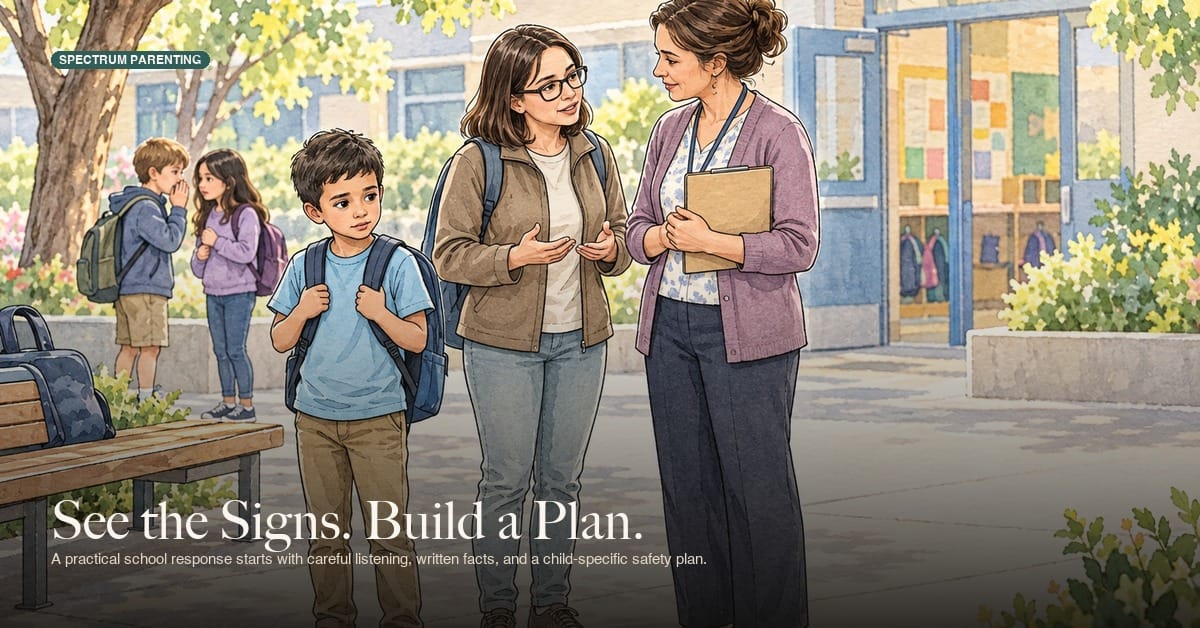
Send a short factual email to the teacher and the person responsible for your child’s support plan, such as the case manager, counselor, or administrator. State what was reported or observed, when and where it happened, why you believe there is a safety concern, and what immediate response you are requesting. Ask who will investigate, when you will receive an update, and what will keep your child safe in the meantime.
A useful request is specific: “Until the school completes its review, please identify an adult who will meet him at arrival, supervise the lunch transition, and check in before dismissal.” “Please keep him safe” is reasonable, but it does not tell the team what needs to happen during the next school day.
Build a child-specific safety plan
A safety plan should work when the child is stressed, not only when everyone is calm in a meeting. Include more than one trusted adult because the favorite teacher may be absent. Give the child more than one way to report. Decide where the child can go, how to ask for help, what adults will do next, and how the family will be told.
- Named adults for arrival, class, lunch or recess, and dismissal
- A private signal, card, message, or AAC phrase that means “I need help”
- A safe location the child can reach without being punished for leaving
- Adult supervision in the exact places where problems occur
- A plan to separate the children without isolating the targeted child
- A daily check-in and a date to review whether the plan is working
Do not make friendship skills, eye contact, masking, or “ignoring it better” the condition for safety. Social coaching may help a child recognize manipulation, practice an exit line, or find a safe peer. It does not transfer responsibility from the children doing the bullying or the adults supervising them. A 2024 systematic review of school bullying involving autistic students found that the wider school context, including teachers and peers, matters. This is not a problem one child should have to solve alone.
When an IEP or 504 plan is involved
If bullying is interfering with attendance, concentration, communication, emotional regulation, learning, or access to school activities, ask the IEP or 504 team to meet. Bring your written timeline and ask whether the current supports are enough. Possible changes might include additional supervision, a check-in and check-out routine, safe transitions, counseling support, communication goals, transportation changes, or another way to access an activity.
The U.S. Department of Education explains that bullying of a student with a disability can interfere with the student’s right to a free appropriate public education. Schools may need to act even when the bullying is not based on disability. The team should examine the effect on the student and decide whether services or placement need to change.
Be cautious if the proposed solution removes only your child from lunch, recess, transportation, electives, or general education. Sometimes a temporary change is needed for immediate safety, but the long-term plan should not quietly reduce the targeted child’s access while everyone else keeps the same routine.
Follow up until the pattern changes
After a meeting or phone call, send a calm summary: what the school agreed to do, who is responsible, and when you will review it. Continue the brief home log. Ask for objective information, such as who supervised the hallway and whether the child used the check-in, rather than accepting “everything seemed fine.”
Set a review date close enough to catch problems early. For an active safety concern, that may mean a brief update after the first day and a fuller review after a week. Ask your child about the same concrete locations and transitions you identified before. Improvement means fewer incidents and better access to school, not simply fewer reports from a child who has stopped expecting help.
If the behavior continues, move the concern up the school’s chain of responsibility and follow the district complaint process. State education agencies and the U.S. Department of Education’s Office for Civil Rights may also have roles depending on the facts. This guide is general information, not legal advice, but you do not have to accept a cycle of verbal reassurance followed by the same unsafe day.
If a child talks about self-harm, suicide, or immediate danger, treat that as urgent. Stay with the child and contact local emergency help or the 988 Suicide & Crisis Lifeline in the United States by calling or texting 988.
The message your child needs to hear
“You are not in trouble. You do not have to explain it perfectly. You can tell me in whatever way works. The adults are responsible for helping you be safe.”
That message matters even before we know every detail. Careful listening, written facts, and a concrete school plan give us a stronger path forward than asking a child to be tougher or more socially typical.
A few of our go-to favorites
Shop the Full StorefrontThere is not a product that fixes bullying. These are simply one real family favorite from each category in our storefront.

Trekassy 40-inch Saucer Tree Swing (Sensory Toys)
Our most-used backyard sensory swing. $39.99
View on Amazon

Skoolzy Peg Board Set (Sensory Learning Toys)
Fine motor practice without a screen. $16.99
View on Amazon

PandaEar Divided Suction Plates (Feeding Tools)
Still in our regular dinner rotation. $8.95
View on Amazon

MaryRuth’s Kids Ionic Zinc Drops (Suppliments)
Part of our everyday routine. $18.95
View on Amazon

Boon Travel Drying Rack (Travel Essential)
Small enough to pack and useful every trip. $12.70
View on Amazon

SwimWays Dive and Catch Game (ASD Swimming Gear)
Builds pool confidence without feeling like a lesson. $19.43
View on Amazon
If you have found a reporting method or school support that helped your child feel safer, you can reach me through the contact page.
Caren