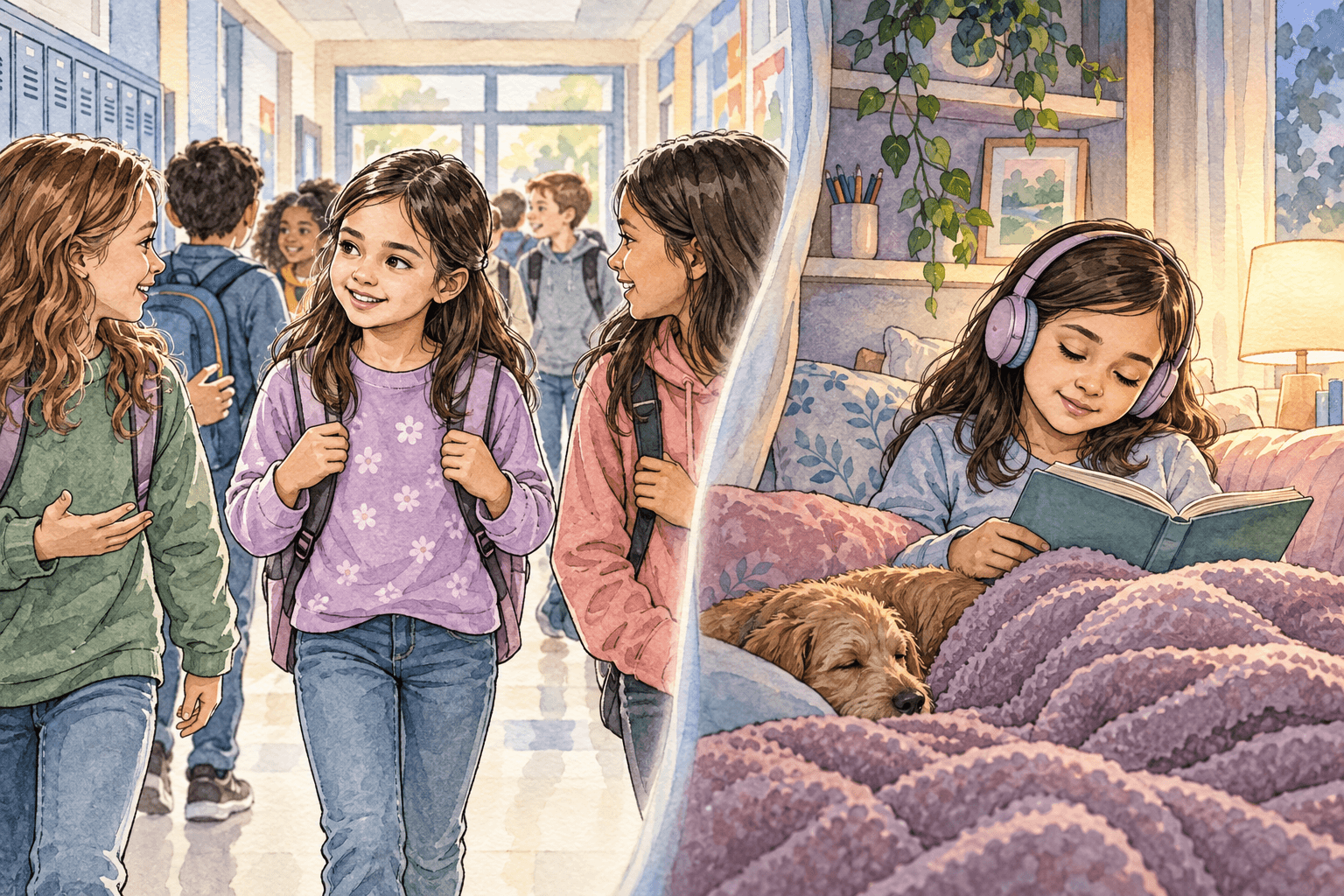
A girl gets through the school day with good grades, a practiced smile, and a careful copy of what the other children are doing. Then she reaches home and falls apart over a small change. Adults may see shyness, perfectionism, anxiety, or a child who is simply “dramatic.” Autism may not be the first question anyone asks.
My son is eight, so I cannot tell this story as the mother of an autistic girl. I can tell you why I started reading about it. Parents keep hearing one narrow picture of what autism looks like, and children who do not match that picture can spend years believing their difficulties are personal failures. Girls deserve a better question than, “Does she look like the autistic boys I already know?”
Why girls can be missed
The NICE guideline for recognizing autism in children and young people specifically warns that autism may be under-recognized in girls. It also says autism should not be ruled out because a child makes eye contact, smiles, shows affection, uses pretend play, or reached expected language milestones.
That matters because the old stereotype is still powerful. Some girls have strong spoken language. Some study social behavior closely and copy it. Their focused interests may look ordinary on the surface, such as animals, books, celebrities, art, or a television series. The difference may be the intensity, the amount of detail, or how much the interest organizes daily life, not the subject itself.
A child may also be quiet instead of disruptive. She may sit through confusion rather than call attention to herself. If school measures success by whether she finishes work and follows rules, adults can miss the energy it costs her to do those things.
What masking can look like
Masking, sometimes called camouflaging, can include rehearsing conversations, forcing eye contact, imitating facial expressions, copying another child’s interests, holding back repetitive movement, or memorizing social rules that other people seem to use automatically. A girl may appear socially comfortable while mentally working through every step.
Research is still developing, and masking is not exclusive to girls. Boys, nonbinary children, and adults may mask too. A participatory study of girls approaching adolescence examined camouflaging across autistic and other neurodivergent experiences and its relationship with mental health. The useful point for a parent is not to diagnose masking from one behavior. It is to notice the gap between what others see and what the child says the day costs her.
- She watches before joining and copies one socially confident peer.
- She rehearses what to say or asks for an exact script before an ordinary interaction.
- She keeps herself together at school, then cries, shuts down, or needs long recovery time at home.
- Friendships are wanted but confusing, intense, or repeatedly painful.
- Sensory discomfort is hidden until she reaches a safe place.
- Rules, perfection, and predictability carry more weight than adults realize.
Look for the cost, not only the performance
A checklist filled out by one adult in one setting may miss the pattern. Ask what happens before school, during lunch, after a substitute teacher, on the ride home, and at bedtime. Ask how long recovery takes after a birthday party or group project. A child who appears fine for six hours may be paying for that performance during the next four.
Write observations without turning them into conclusions. “She is exhausted after lunch in the cafeteria and stays under a blanket for an hour after school” is useful. “She masks all day” is an interpretation. Bring the first kind of note to the pediatrician, school team, or evaluator and let the fuller pattern guide the questions.
Include strengths. Notice the settings where conversation flows, sensory needs are easier to meet, and friendship feels safer. Those details can show what access looks like. They also prevent an evaluation from becoming a list of everything a child supposedly does wrong.
Ask about what was not measured
If an evaluation says “not autistic” but the concerns remain, ask how the evaluator considered sex and gender differences, masking, sensory experiences, adaptive functioning, friendships, anxiety, and the contrast between settings. Ask which information came directly from the child. Ask whether the assessment depended heavily on visible behavior during one appointment.
NICE advises professionals not to dismiss autism because a previous assessment found otherwise when new information becomes available. That does not mean every quiet, anxious, or socially tired girl is autistic. It means a prior answer should not close the door when the developmental history and current needs still point to unanswered questions.
- Bring examples from home, school, activities, and unstructured social time.
- Ask the child how interactions feel rather than judging only how they look.
- Describe sensory effort, shutdowns, recovery time, and rehearsed social behavior.
- Ask whether anxiety, ADHD, language, learning, trauma, or another condition also needs assessment.
- Request accommodations that help the child communicate during the evaluation.
Support does not have to wait for a label
If a child is overwhelmed by noise, she can use a quieter space while adults investigate why. If open-ended group work causes confusion, the teacher can make roles and expectations clearer. If spoken answers disappear under pressure, writing or another communication option may give her a way in.
Do not make “looking normal” the goal. A child who stops moving her hands because classmates stare may appear more compliant while becoming less regulated. A child who forces eye contact may understand less of the conversation. Support should reduce the load and improve access, not train her to hide discomfort for adult convenience.
Let her leave an exhausting activity without treating that choice as failure. Make room for direct communication, including “I don’t know,” “I need a break,” and “I understood the assignment but could not start.” Those sentences contain information that a behavior chart may never capture.
Prepare for an evaluation without coaching a performance
Tell the evaluator about communication, sensory, language, and scheduling needs before the appointment. Ask whether questionnaires can be completed in advance and whether the child can bring a familiar communication system, comfort item, or written notes. A longer appointment is not automatically a better one if the child becomes too tired to participate.
Do not teach a girl which answers are supposed to “look autistic.” Explain that the appointment is a place to describe what feels easy, hard, confusing, painful, or exhausting. Let her say when she does not understand a question. If she wants a parent present for part of the interview, ask how the evaluator handles private and shared portions.
Bring developmental history, school reports, prior evaluations, examples of intense interests, and observations across settings. Include internal experiences the child has shared, such as mentally rehearsing every lunch conversation or losing track of speech in noise. Those details may never appear during a calm one-to-one appointment.
If anxiety, depression, eating difficulty, self-harm, or severe exhaustion is present, seek appropriate health support without waiting for the autism evaluation to finish. Autism may help explain part of the picture, but immediate safety and health needs still deserve direct attention.
Protect the child from a new performance
Once adults learn about masking, there is a temptation to watch for it constantly. That can become another demand. Do not ask a girl to prove she is struggling, perform autistic traits, or explain every social choice. Give her privacy. Let trust build slowly.
Use identity language the child prefers. Talk about autism as a way a brain develops, not a tragedy she successfully hid. If she receives a diagnosis, she may feel relief, grief, anger, recognition, or very little at first. There is no correct emotional response.
I keep coming back to one simple lesson from this research: behavior that looks easy may not feel easy. Listen to the child, compare settings, and keep asking what support would make daily life less expensive for her nervous system.
If your questions are still being brushed aside, write down the pattern and bring it back. A girl should not have to reach complete burnout before the adults around her become curious.
A Few of Our Go-To Favorites
Shop the Full StorefrontNothing in our storefront is specific to this guide, so here’s one real favorite from each of our categories instead.

Trekassy 40" Saucer Tree Swing (Sensory Toys)
Our most-used backyard sensory swing, hands down.
$39.99

Skoolzy Peg Board Set (Sensory Learning Toys)
Great for fine motor practice, no screen required.
$16.99

MaryRuth’s Kids Ionic Zinc Drops (Suppliments)
Part of our everyday immune-support routine.
$18.95

Boon Travel Drying Rack (Travel Essential)
Small enough to actually pack, useful every trip.
$12.70
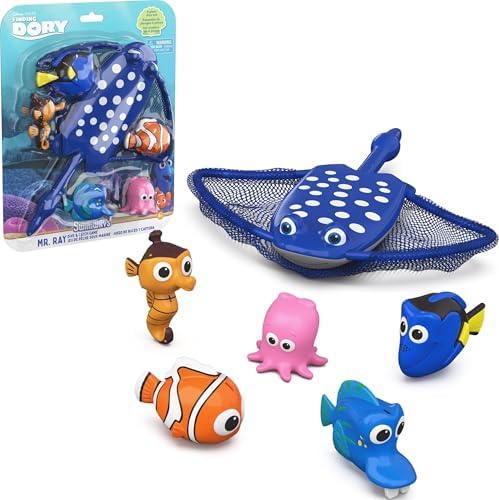
SwimWays Dive and Catch Game (ASD Swimming Gear)
Builds pool confidence without feeling like a lesson.
$19.43
If you’ve already been down this road and found something I didn’t mention here, I’d genuinely like to hear it. You can always reach me through the contact page.
Caren