One child needs help getting through dinner. Another waits with a school paper in hand, says “never mind,” and walks away. Nobody intended to ignore that second child. The loudest need simply filled the room first.
I do not have a firsthand sibling story to turn into a neat lesson. What I can do is take the question seriously: what do brothers and sisters of autistic children need from the adults raising them? The answer starts with seeing them as children with their own needs, not as built-in helpers who should always understand.
Make room for mixed feelings
A sibling can love an autistic brother or sister and still feel embarrassed, angry, protective, worried, jealous, proud, or tired. Two feelings can sit together. Adults make those feelings harder when we correct them too quickly or turn every complaint into a lecture about gratitude.
The American Academy of Pediatrics clinical report on autism says siblings may experience added stress, resentment about attention and resources, or early involvement in caregiving. It recommends teaching siblings about autism, offering peer support, and watching their emotional health too.
That does not mean sibling relationships are automatically damaged. It means adults should not assume the quieter child is fine because they are doing well at school or rarely complain. Ask direct, ordinary questions: “What was hard this week?” “Did anything at home feel unfair?” “Is there something you wish I noticed sooner?”
Explain autism in words that fit the child
Children notice differences long before adults finish choosing the perfect explanation. Give them truthful information at their level. An autistic sibling may communicate differently, need more recovery time, repeat movements, struggle with unexpected changes, or need support with tasks another child does independently. None of those differences make anyone bad.
Avoid making autism the explanation for every conflict. Taking a toy without asking still affects the other child. A loud reaction may come from overload, but the sibling who was frightened still deserves comfort. Explain the reason and repair the harm. Both matter.
- Use concrete examples from daily life instead of one long medical definition.
- Say what the autistic child is communicating or trying to manage.
- Answer questions without sharing private details the autistic child would not want repeated.
- Correct blame and cruelty, but do not punish honest questions.
- Revisit the conversation as both children grow.
Protect one-on-one time
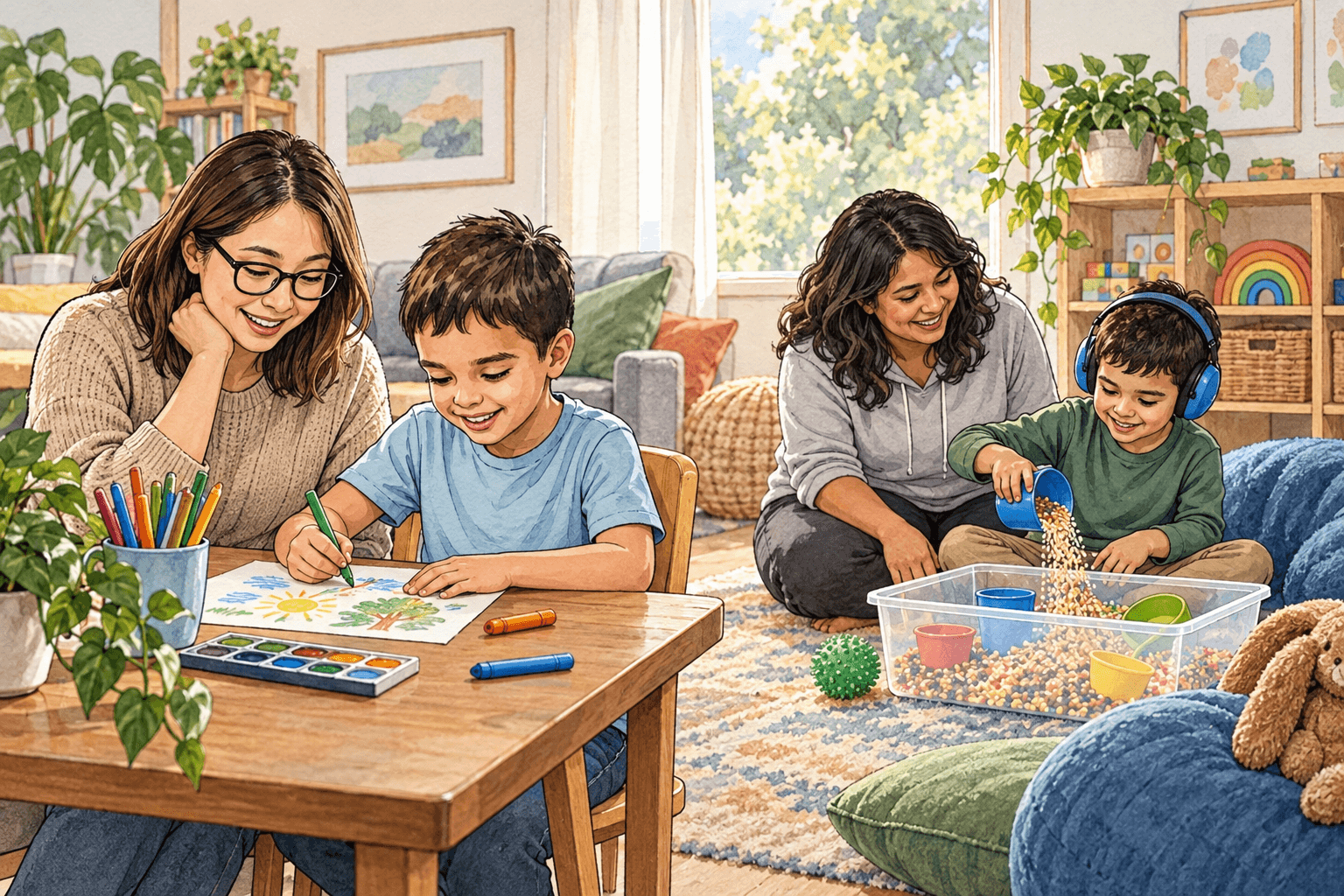
One-on-one time does not have to be an expensive outing. The American Academy of Pediatrics’ HealthyChildren guidance on sibling relationships suggests fitting individual attention into regular routines, such as a bedtime conversation, walking the dog, or occasionally choosing an activity alone with one parent.
Put the time on the calendar when possible. Otherwise, the urgent appointment, phone call, or meltdown will take it. If plans must change, name what happened and reschedule. “I know this was your time and I am sorry we had to stop” respects the child more than pretending they did not mind.
During that time, let the sibling choose the subject sometimes. Autism already influences many family decisions. Their private time should not become another meeting about the autistic child.
Do not turn a sibling into a third parent
Helping is part of family life. A child might grab headphones, demonstrate a game, or wait while a parent handles a hard moment. The line gets crossed when helping becomes an expected caregiving role, the sibling’s plans are repeatedly sacrificed, or adults praise them mainly for being “so mature” and undemanding.
Watch the words you use. “You know better” can quietly mean “your needs always come second.” “Please give in because this is harder for your sibling” may solve the next five minutes while teaching one child that boundaries do not apply to them.
- Ask before assigning help whenever the situation allows.
- Keep chores age-appropriate and shared fairly.
- Never make a child responsible for preventing a sibling’s meltdown or wandering.
- Provide an adult backup plan so the sibling can leave an overwhelming situation.
- Do not promise or imply a future caregiving role.
Future care deserves a family conversation when children are old enough to participate, and the autistic person’s preferences belong at the center. A sibling may choose a close role later. That relationship should grow from consent, not a job assigned in childhood.
Make home physically and emotionally safer
If hitting, throwing, property damage, or frightening behavior happens, do not ask a sibling to accept it because autism is involved. Build a safety plan with qualified support. Give each child a place to go, a way to call an adult, and permission to protect their body and belongings.
Repair after conflict. Help the autistic child communicate or make amends in a way they can access. Help the sibling name what happened without turning either child into the family villain. Safety and disability acceptance belong in the same home.
Give siblings support that is theirs
Some children want to meet peers who understand family life with disability. Ask the pediatrician, school counselor, local autism organization, or hospital family-resource center about sibling groups. A group should let children talk about good and hard experiences without pressuring them to be inspirational.
Individual counseling may help when a child shows persistent anxiety, sadness, sleep changes, physical complaints, school avoidance, or fear about home. Support does not mean the family failed. It gives the child a place where they do not have to protect anyone else’s feelings.
Give them words for questions outside the house
Friends and classmates may ask why an autistic sibling communicates, moves, eats, or reacts differently. Decide together what the sibling feels comfortable saying. A short answer can be enough: “My brother is autistic and noise can hurt his ears,” or “She communicates with a device.” The child does not owe anyone a diagnosis lesson.
Protect privacy in both directions. Do not share a sibling’s private fears with the autistic child as proof that behavior must change. Do not expect the sibling to tell friends about toileting, medical care, meltdowns, or other personal details. Help them set a boundary: “That is private,” “Ask my parent,” or “I don’t want to talk about it.”
Design family plans with more than one child in mind
Before an outing, identify what each child needs. One may need headphones, a visual schedule, and an exit plan. Another may need permission to stay longer with a trusted adult instead of leaving every activity early. Sometimes the family goes together. Sometimes dividing up protects both children’s access.
Keep a backup for canceled plans. If one child cannot attend, decide whether the sibling’s event can continue with another caregiver, relative, or family friend. The answer will not always be yes. What matters is that adults considered the sibling’s day instead of treating cancellation as automatic and invisible.
Notice what belongs to each child
Celebrate the sibling’s interests without comparing them. Attend their event when you can. Put their artwork on the refrigerator. Know the friend’s name, the book they are rereading, and the joke they keep telling. Small evidence of attention counts.
Also protect the autistic child from being discussed as a burden. Siblings take their cues from adults. We can name difficulty without teaching that one child ruined the day. “The noise became too much, so we changed the plan” is honest. “We can never do anything because of your sibling” leaves a wound in both directions.
I cannot promise equal time every day. Families do not work like a perfectly balanced chart. I do believe each child should hear, regularly and privately, “You do not have to earn my attention by being easy.”
Keep asking. The answer may change with age, school, friendships, and the level of support needed at home. Listen again after a move, a new classroom, or a family routine change. A sibling relationship deserves room to be real, not perfect.
A Few of Our Go-To Favorites
Shop the Full StorefrontNothing in our storefront is specific to this guide, so here’s one real favorite from each of our categories instead.

Trekassy 40" Saucer Tree Swing (Sensory Toys)
Our most-used backyard sensory swing, hands down.
$39.99

Skoolzy Peg Board Set (Sensory Learning Toys)
Great for fine motor practice, no screen required.
$16.99


MaryRuth’s Kids Ionic Zinc Drops (Suppliments)
Part of our everyday immune-support routine.
$18.95

Boon Travel Drying Rack (Travel Essential)
Small enough to actually pack, useful every trip.
$12.70

SwimWays Dive and Catch Game (ASD Swimming Gear)
Builds pool confidence without feeling like a lesson.
$19.43
If you’ve already been down this road and found something I didn’t mention here, I’d genuinely like to hear it. You can always reach me through the contact page.
Caren