A child is waiting in a bright checkout line, rocking from heel to toe and flicking both hands near his shoulders. An adult reaches down and whispers, “Quiet hands.” The movement stops for a few seconds. The strain on the child’s face does not.
That small moment is why I wanted to look more carefully at stimming. Adults often notice the movement first because it is visible. The better question is what the movement is doing for the child. It may help with excitement, anxiety, concentration, sensory overload, or simply the pleasure of a rhythm that feels good.
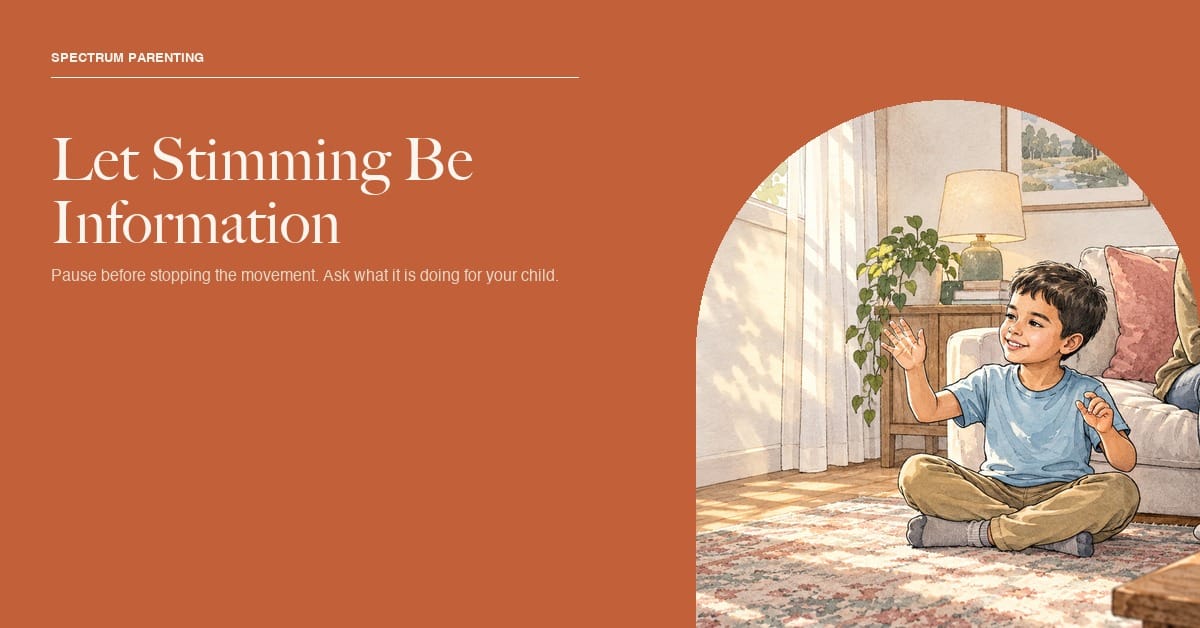
Stimming is short for self-stimulatory behavior. Hand flapping, rocking, humming, pacing, repeating a phrase, rubbing a texture, spinning an object, or watching light move can all be stims. Non-autistic people do versions of this too when they tap a foot, click a pen, twirl their hair, or walk around during a phone call. Autistic stimming may be more noticeable or more necessary for regulation.
Begin with curiosity
I read guidance written by autistic people because they can tell us what the movement feels like from the inside. The Autistic Self Advocacy Network’s ethics guide warns against services whose goal is simply to reduce stimming or make an autistic person look less autistic. That point changes the starting question. Instead of asking, “How do I make this stop?” we can ask, “Is this safe, and what need is it meeting?”
Watch before redirecting. What happened immediately before the stim? Did the room get louder? Did a demand begin? Is the child waiting, excited, tired, worried, or deeply focused? What happens if the movement is allowed? A child who settles and returns to the task may be using the stim exactly as intended.
Separate visibility from harm
A visible stim can make an adult uncomfortable without hurting anyone. Rocking in a chair, repeating a favorite line, or moving hands during a lesson may draw attention, but attention from other people is not proof that the behavior needs to disappear. Sometimes the accommodation belongs in the environment: more room, a quieter seat, permission to stand, or adults who explain difference without shaming the child.
Safety still matters. A child may hit their head, bite skin, chew an unsafe object, run into people, or spin until they fall. Painful or suddenly intensified stimming also can be information about stress, illness, sleep, medication effects, or an environment the child cannot manage. The response should protect the child while keeping the function of the stim in view.
For example, blocking a child from biting their hand without offering another form of strong oral or pressure input leaves the need unanswered. A pediatrician, occupational therapist, speech-language pathologist, dentist, or other qualified professional may help identify pain, communication barriers, sensory needs, or safer alternatives. The goal is a safer way to regulate, not stillness for its own sake.
Ask before replacing a stim
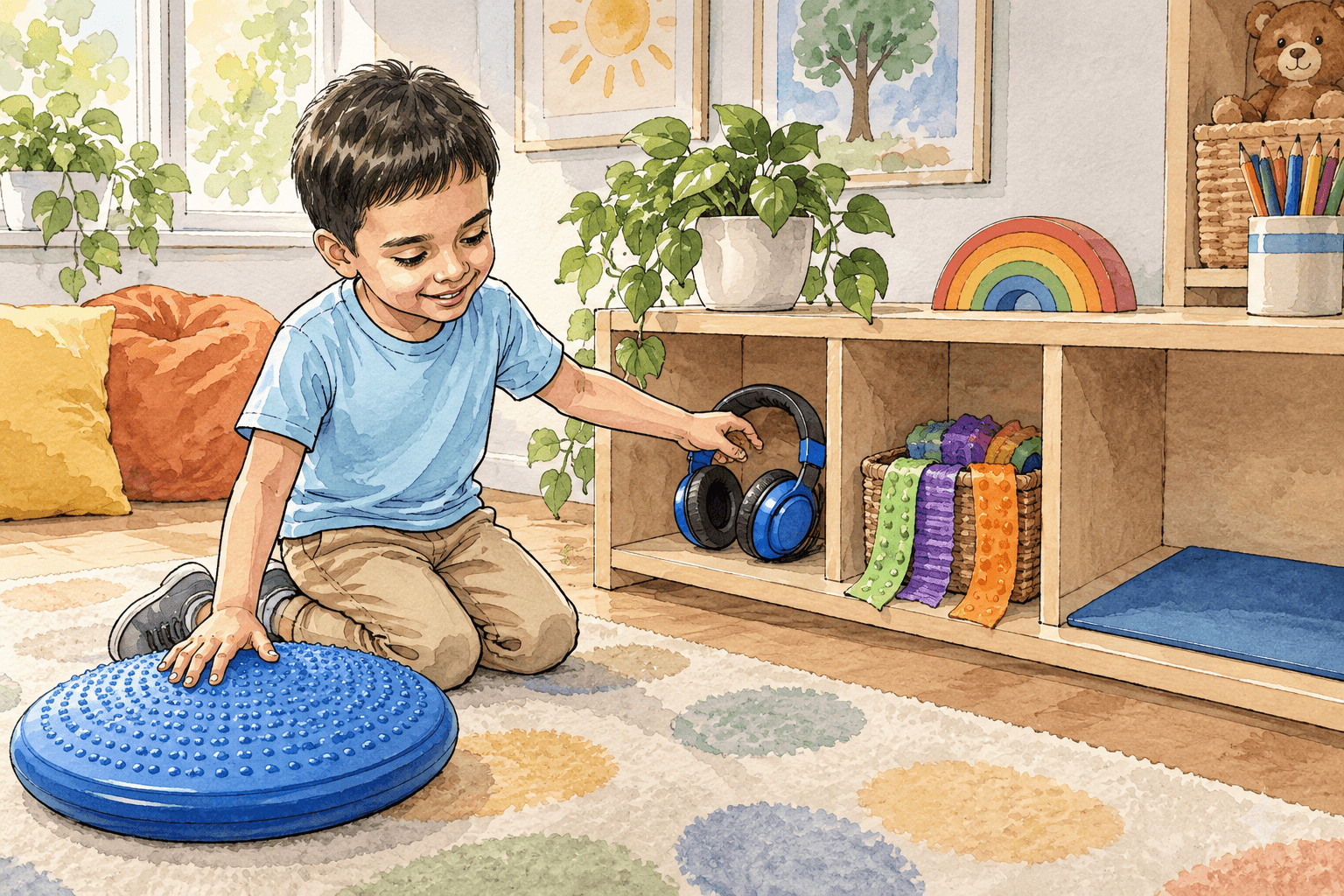
If the child can communicate a preference, ask. “Does rocking help?” “Do you want more space?” “Would headphones, a movement break, or this chewy feel better?” The answer might come through speech, AAC, pointing, body movement, or what the child consistently chooses when several safe options are available.
A replacement also has to work as well as the original. A tiny fidget may not replace full-body pacing. A quiet squeeze ball may not give the same input as humming. An option that adults consider more socially acceptable can be useless to the person who needs it. Offer choices, observe the result, and let the child reject an alternative that does not help.
Make room at school
School expectations often reward still bodies. A child can end up spending attention on suppressing movement instead of listening, writing, or recovering from a noisy transition. If stimming helps the child stay available for learning, describe that function to the team.
- Permission to stand, rock, pace in a defined area, or use a quiet vocal stim
- Access to a movement break without having to earn it through compliance
- A seating choice that gives the child space and does not isolate them
- Headphones or a quieter location when noise is driving distress
- Safe sensory items chosen with the child, not handed over as a command to stop moving
- Staff language that avoids “quiet hands,” public correction, and taking away regulation tools as punishment
Write the support in observable terms. “May take a five-minute movement break when requested by speech, gesture, card, or AAC” is clearer than “sensory breaks as needed.” Include how the child asks, where they can go, which adults know the plan, and how they return without losing work or recess.
What if other children stare?
We can teach peers that people move and communicate in different ways without sharing a child’s private diagnosis. “His hands are helping his body right now. Give him room.” That is enough. If teasing or exclusion follows, adults need to address the teasing. Asking the autistic child to hide more should not be the school’s anti-bullying plan.
There may be places where privacy or physical space changes what is safe. A crowded bus aisle is different from a living-room floor. A science lab with open flames is different from the back of a classroom. We can plan for the actual setting without turning every public movement into a problem.
Give relatives a simple script
A grandparent or family friend may say, “He needs to learn not to do that in public.” Long explanations rarely work in the middle of a busy gathering. Try one clear line: “That movement helps him regulate, and it is safe.” If the person keeps correcting the child, add a boundary: “Please do not hold his hands or tell him to stop. If you are worried, ask me privately.”
Prepare the setting too. Make space away from breakable objects, show the child where a quieter room is, bring familiar regulation choices, and tell the host that movement may increase when the house gets loud. The child should not have to perform calmness for a holiday meal. Leaving early, eating in another room, or taking a long movement break can be a successful visit.
If someone records the child or posts a video because the stim looks unusual, ask them to stop and delete it. Regulation is not entertainment. Older children can help decide what family members may share, and adults can protect that privacy for children who cannot answer in the moment.
Notice sudden changes
A familiar stim that becomes much more frequent, forceful, or distressed deserves attention. Write down when the change began, what the child was doing, sleep and eating changes, signs of pain, new medicines, and what helps. A pattern log gives the pediatrician or school team something more useful than “the behavior got worse.”
Do not assume the stim itself is the emergency. The change may be the child’s clearest available signal that something hurts or feels unmanageable. Addressing constipation, a dental problem, bullying, a schedule change, or constant noise may reduce distress without anyone targeting the child’s natural movement.
A short decision check
- Is anyone in immediate danger?
- What happened before the stim, and what changes after it?
- Can the environment be changed first?
- Has the child been offered a real choice?
- If a safer alternative is needed, does it meet the same need?
- Does a sudden change call for medical, communication, or school follow-up?
The hardest part may be unlearning the idea that a calm-looking child is always a comfortable child. Suppressing a movement can make a room easier for adults while making the child work much harder inside. I would rather start with safety, communication, and respect.
A child should not have to hide every visible sign of being autistic to be welcomed in a classroom, store, family gathering, or playground. Give the movement room when it is safe. When it is not safe, protect the child and stay curious about the need underneath it.
A Few of Our Go-To Favorites
Shop the Full StorefrontNothing in our storefront is specific to this guide, so here’s one real favorite from each of our categories instead.

Trekassy 40" Saucer Tree Swing (Sensory Toys)
Our most-used backyard sensory swing, hands down.
$39.99

Skoolzy Peg Board Set (Sensory Learning Toys)
Great for fine motor practice, no screen required.
$16.99

MaryRuth’s Kids Ionic Zinc Drops (Suppliments)
Part of our everyday immune-support routine.
$18.95

Boon Travel Drying Rack (Travel Essential)
Small enough to actually pack, useful every trip.
$12.70
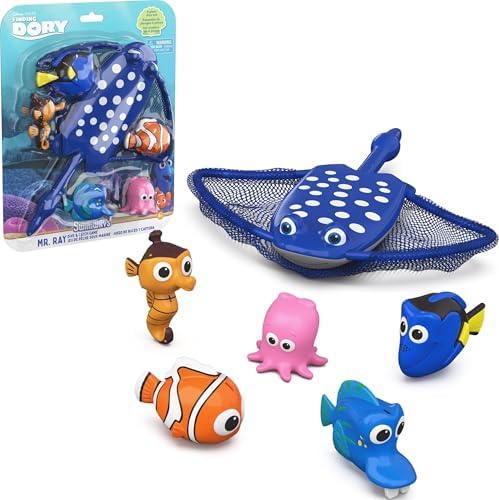
SwimWays Dive and Catch Game (ASD Swimming Gear)
Builds pool confidence without feeling like a lesson.
$19.43
If you’ve already been down this road and found something I didn’t mention here, I’d genuinely like to hear it. You can always reach me through the contact page.
Caren