A child can love pumpkins in the quiet of the kitchen and still freeze when a masked stranger opens the front door. Both things can be true.
Halloween asks children to handle a surprising amount at once: unfamiliar clothes, decorations that move, doorbells, darkness, crowds, candy they may not eat, and a social script they are expected to repeat. For an autistic child, that can turn a fun idea into a very long list of sensory and communication demands.
I put this plan together as a practical starting point, not a rulebook. Your child may want the whole neighborhood experience, one familiar porch, or a quiet evening at home. The goal is not to make Halloween look typical. The goal is to help it feel safe, understandable, and theirs.
Start by deciding what success means
Before choosing a costume or route, decide what a good Halloween would look like for your child. Keep the answer small and specific. Success might mean:
- wearing a favorite shirt with a simple accessory
- visiting two familiar neighbors
- walking outside without approaching any doors
- handing out treats from your own porch
- decorating a pumpkin and watching a movie at home
- trying the plan for ten minutes, with permission to stop
There is no prize for staying out the longest. A short outing that ends before a child is overwhelmed is a complete Halloween, not a practice round.
Build the plan with your child
The National Autistic Society recommends involving the autistic person in planning and considering a limited number of prearranged houses. That matters because predictability is easier to trust when the child has real choices.
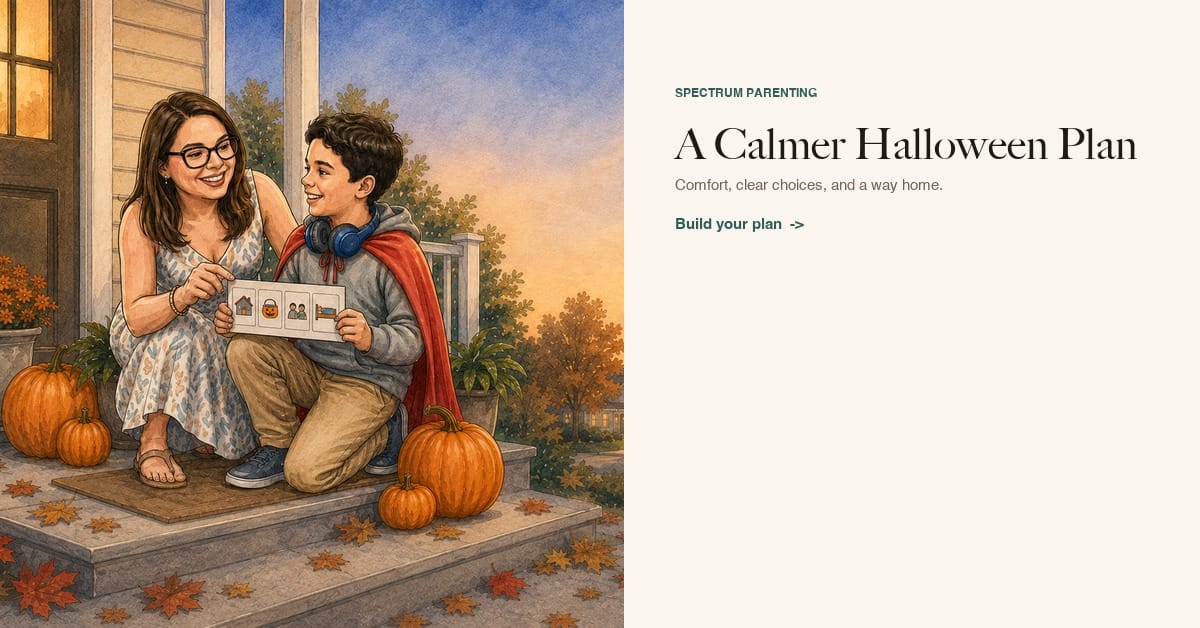
Make a simple visual sequence using photos, drawings, or words:
- Put on comfortable clothes.
- Pack the calm kit.
- Visit Grandma’s house.
- Visit two neighbors.
- Come home.
- Choose a quiet activity.
Show the beginning and the end. A schedule that only says what happens next can feel endless. Add a clear finish such as home, pajamas, or movie. If a social story works well for your child, the Autism Society has a free Halloween social story you can read together and adapt.
Choose comfort before costume accuracy
A costume that looks wonderful but feels terrible will not become more comfortable because it is October 31. Scratchy seams, face paint, tight elastic, strong fabric smells, masks, hats, and unfamiliar shoes can each be the thing that ends the evening.
Start with clothes your child already tolerates. A favorite hoodie can become part of a costume. Pajamas can be a costume. A cape, headband, or badge can be carried instead of worn. Cut out tags, test face paint on a small area, and practice for short periods at home. Let your child remove any piece without turning it into a negotiation.
Safety still matters. The American Academy of Pediatrics advises choosing a costume that fits well, avoiding masks that block vision, and adding reflective tape or another visible element. Bring a flashlight, use sidewalks and crosswalks, and accompany young children.
Practice the door routine without demanding speech
Trick-or-treating has a hidden sequence: walk up, wait near other people, ring or knock, face a stranger, say the expected phrase, choose or accept an item, say thank you, and walk away. Practice with one trusted adult while the house is quiet. Then let your child choose how to participate.
Communication options can include saying “trick or treat,” waving, pointing, holding up a card, using AAC, or letting a parent speak. A child should not have to perform speech to receive kindness.
These short scripts can help:
- For your child: “No thank you.” “I need a break.” “All done.”
- For the person at the door: “They may not say trick or treat, but they are happy to be here.”
- For relatives: “Please do not ask them to put the mask back on or stay longer. We are following their plan.”
Pick the easiest time and route
Earlier is often quieter and lighter. Choose a few familiar homes, tell the neighbors what would help, and walk the route in daylight before Halloween. If animated decorations or barking dogs are hard, skip those houses. Keep the car nearby or stay close enough to walk home quickly.
Write the stopping point into the plan. “Three houses, then home” is much clearer than “We will see how it goes.” You can always add something if your child genuinely wants more. It is harder to restore a sense of control after the plan changes without warning.
Pack a small calm kit
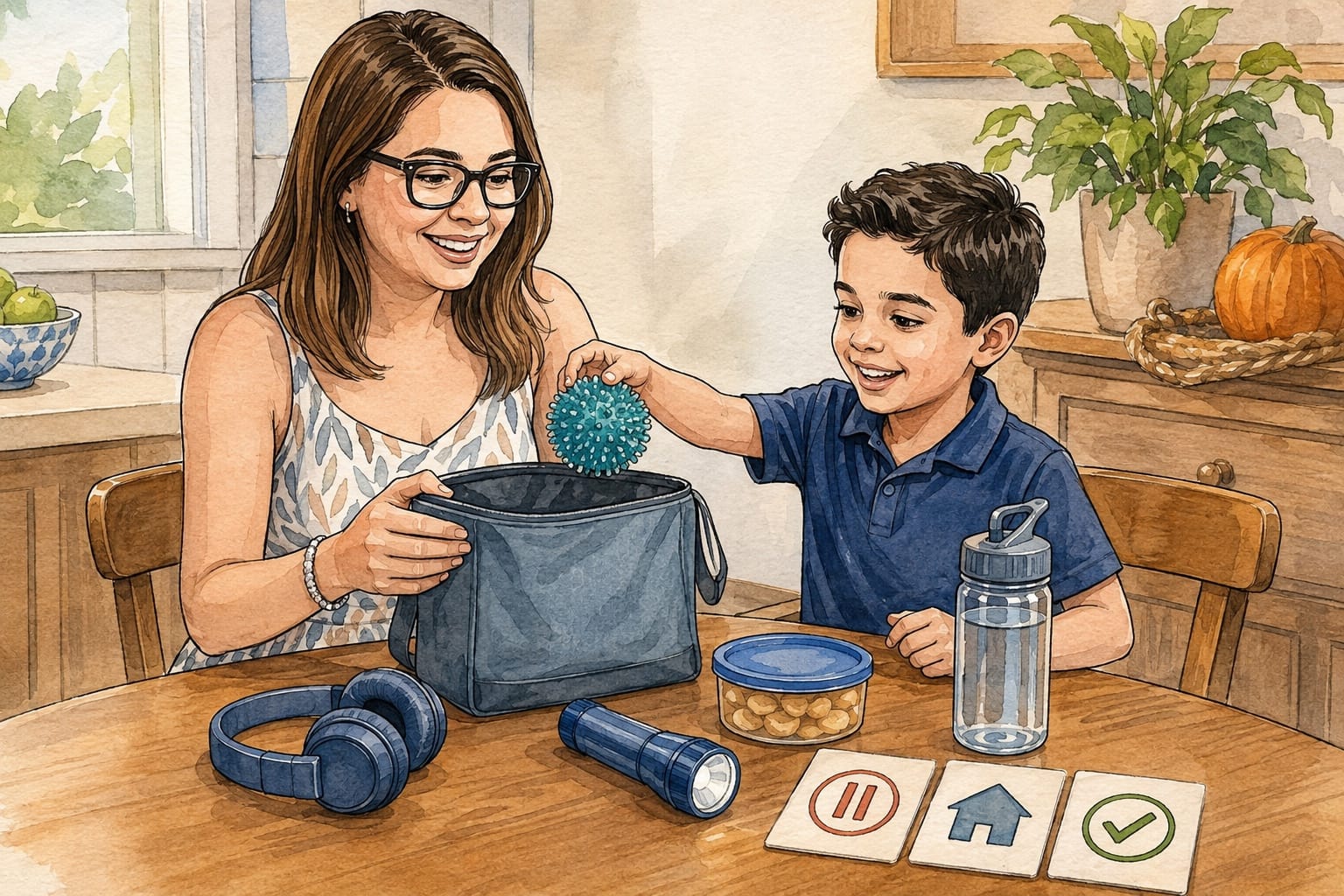
Use a backpack, tote, or stroller pocket. Pack only familiar items so Halloween is not the first test. Depending on your child’s needs, the kit might include:
- hearing protection
- a familiar fidget
- a flashlight
- water and a safe snack
- a comfort item
- a small communication card
- a “break,” “home,” or “all done” picture
- an extra familiar shirt if the costume comes off
Hearing protection should be an option, not a requirement. Some children want it before leaving home. Others want to carry it and decide later. The same is true for every tool in the bag.
Plan for candy, allergies, and non-food treats
Your child does not have to eat the candy for trick-or-treating to count. Bring a familiar snack if hunger could make the outing harder, and sort treats at home where there is good light and less pressure. The American Academy of Pediatrics recommends checking treats before children eat them.
If food allergies are part of your plan, look for a teal pumpkin. The Teal Pumpkin Project encourages households to offer non-food items and keep them separate from candy. A teal pumpkin is about food allergy inclusion. It is not an autism identifier.
You can also place non-food choices on your own porch, such as stickers, pencils, bubbles, or small fidgets. Check age guidance and choking hazards before offering small items.
Make the exit plan as real as the activity plan
Decide how your child will say stop. It could be a word, an AAC button, a picture card, a hand signal, or handing you the bag. Practice responding immediately. If “all done” sometimes means “one more house,” it stops feeling like a dependable exit.
Watch for your child’s earlier signs of overload instead of waiting for a crisis. That may look like becoming very quiet, covering ears, moving faster, repeating a question, pulling at clothes, dropping to the ground, or trying to leave. The signs are individual. The useful question is not “Can we squeeze in one more?” It is “Does my child still feel safe enough to choose?”
Leaving early is not giving up. It is following the plan.
A stay-home Halloween is still Halloween
The Autism Society’s social story reminds families that there are many ways to celebrate. Your child might decorate a pumpkin with markers, sort candy, wear pajamas, watch a familiar movie, make a simple snack, or answer the door once and then be done. They might skip Halloween entirely.
Participation is not measured by how closely the evening matches someone else’s childhood. A calm celebration still counts.
Sensory-friendly Halloween checklist
- Choose one clear, child-centered definition of success.
- Make a visual plan with a visible ending.
- Practice the costume and door routine ahead of time.
- Offer communication choices without requiring speech.
- Pick a short, familiar route and an earlier time if helpful.
- Pack familiar regulation and communication tools.
- Bring a safe snack and make a food allergy plan if needed.
- Agree on a stop signal and honor it immediately.
- Keep a comfortable home option available.
You do not need to use every idea here. Choose the pieces that lower demands for your child. Comfort, communication, and a trusted way home are a strong plan.
Halloween can look different and still belong to your child.
Caren
Small Sensory Picks for a Calm Kit
Shop the CollectionThese are optional examples from my sensory storefront. Use only tools your child already likes and can use safely.

Fidget Slug Toys, 3 Pack
Small enough for a calm kit when this texture and movement are already familiar.
$9.99

Round Pop Fidget Keychains, 30 Pack
A non-food porch treat option for children old enough to use small pieces safely.
$7.59

Textured Sensory Worry Stones, 6 Pack
A quiet handheld choice that can fit in a pocket or small bag.
$6.99
As an Amazon Associate, I may earn from qualifying purchases at no extra cost to you. Prices shown were checked when this draft was prepared and may change.